Repeatable AI workflows,
packaged as skills.
Reusable Codex/Claude-style skill folders for repeatable AI workflows.
What is JQ AI Skills?
The JQ AI Skills library is a public MIT-licensed skills library that packages repeatable AI workflows into installable skill folders. It includes skills for safe GitHub publishing, profile proof refreshes, social campaign tracking, public case studies, human-reviewed outreach pipelines, Etsy listing optimization, public-source research briefing, skill review, authorized web scraping, verified image-provenance cleanup, copy cleanup, code deduplication, animated demo generation, and release announcement writing.
What was broken.
Many AI workflows start life as a prompt, a note, or a one-off instruction pasted into a chat. That is useful for experimentation, but fragile in production. The workflow gets lost, the safety checks are inconsistent, and nobody can easily review, install, or reuse the method later.
The problem JQ AI Skills solves is packaging. A repeatable workflow should have a home: a named folder, clear instructions, any supporting assets or scripts, examples, review expectations, and versioned release notes. Without that structure, the same workflow keeps being reinvented from memory.
What was built.
JQ AI Skills turns those workflows into installable skill folders. Each skill is organized so Codex, Claude Code, or a similar agentic coding environment can understand when to use it, what steps to follow, what guardrails matter, and what output the user should expect.
The library covers practical studio workflows: safe GitHub publishing, GitHub profile proof refreshes, social campaign tracking, public case study writing, human-reviewed outreach pipeline design, Etsy listing optimization, public-source research briefing, skill review, authorized web scraping, verified image-provenance cleanup, copy cleanup, code deduplication, animated demo generation, and release announcement writing. The v0.11.0 release adds three evidence-based writing skills (verify-public-claims, research-to-article, and write-evidence-backed-profile), growing the library to 39 skills. A curated subset of 25 is featured on this site's Skills Lab; the full library lives in the repo. The repo also includes a top-level START_HERE.md onboarding path, QUICK_REFERENCE.md, public proof index, install and update guides, skill quality matrix, public-safe examples, sample artifacts, security and support docs, release notes, and GitHub Actions validation.
This is the technical credibility layer behind JQ AI SYSTEMS: it shows how repeatable AI workflows can be packaged, reviewed, documented, installed, and reused instead of living as one-off prompts.
Architecture in plain English.
See it in action.
The library is public on GitHub under the MIT license. Release copy should reference v0.11.0 as the current public release and link the evidence-based writing bundle plus the public-safe verification samples.
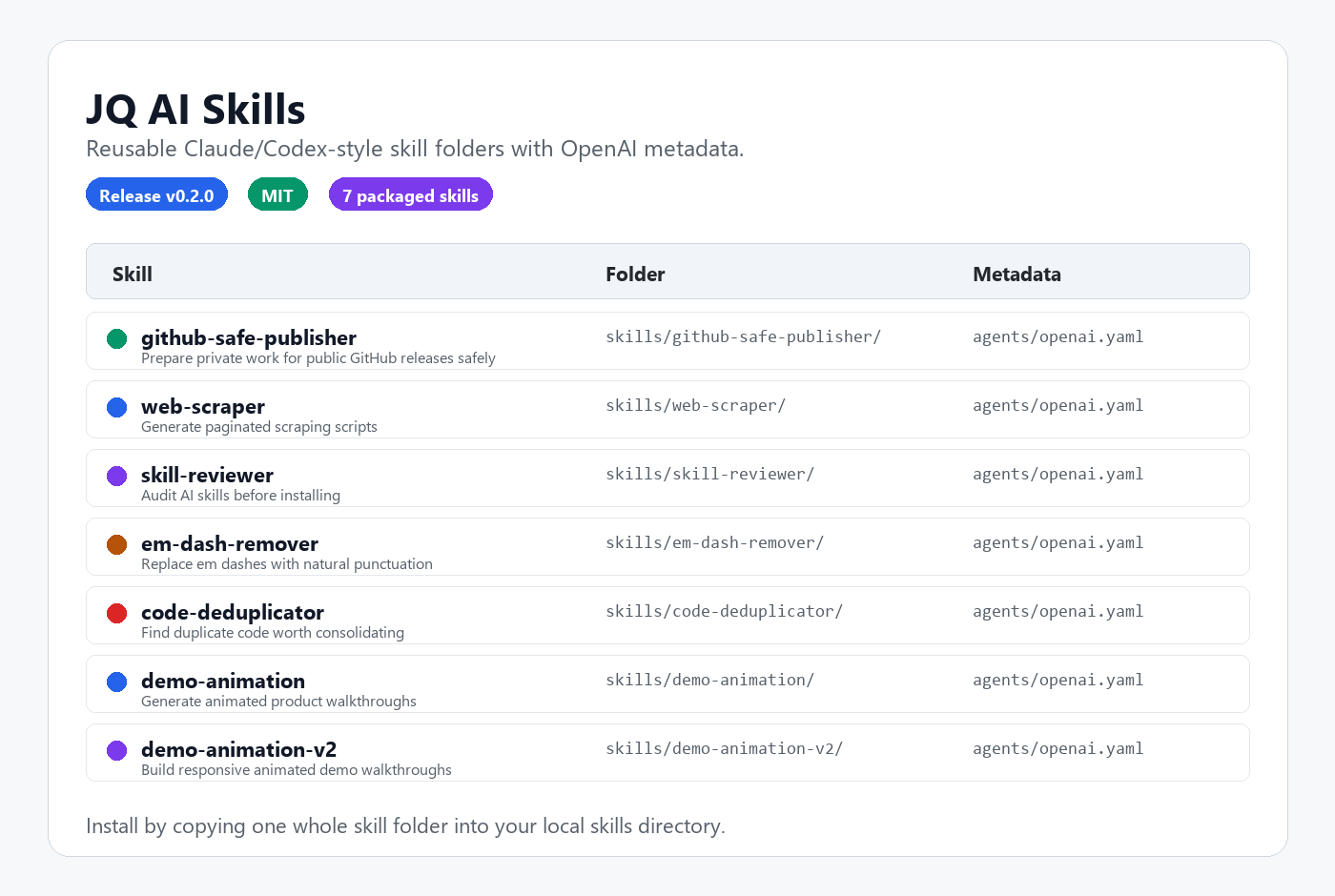
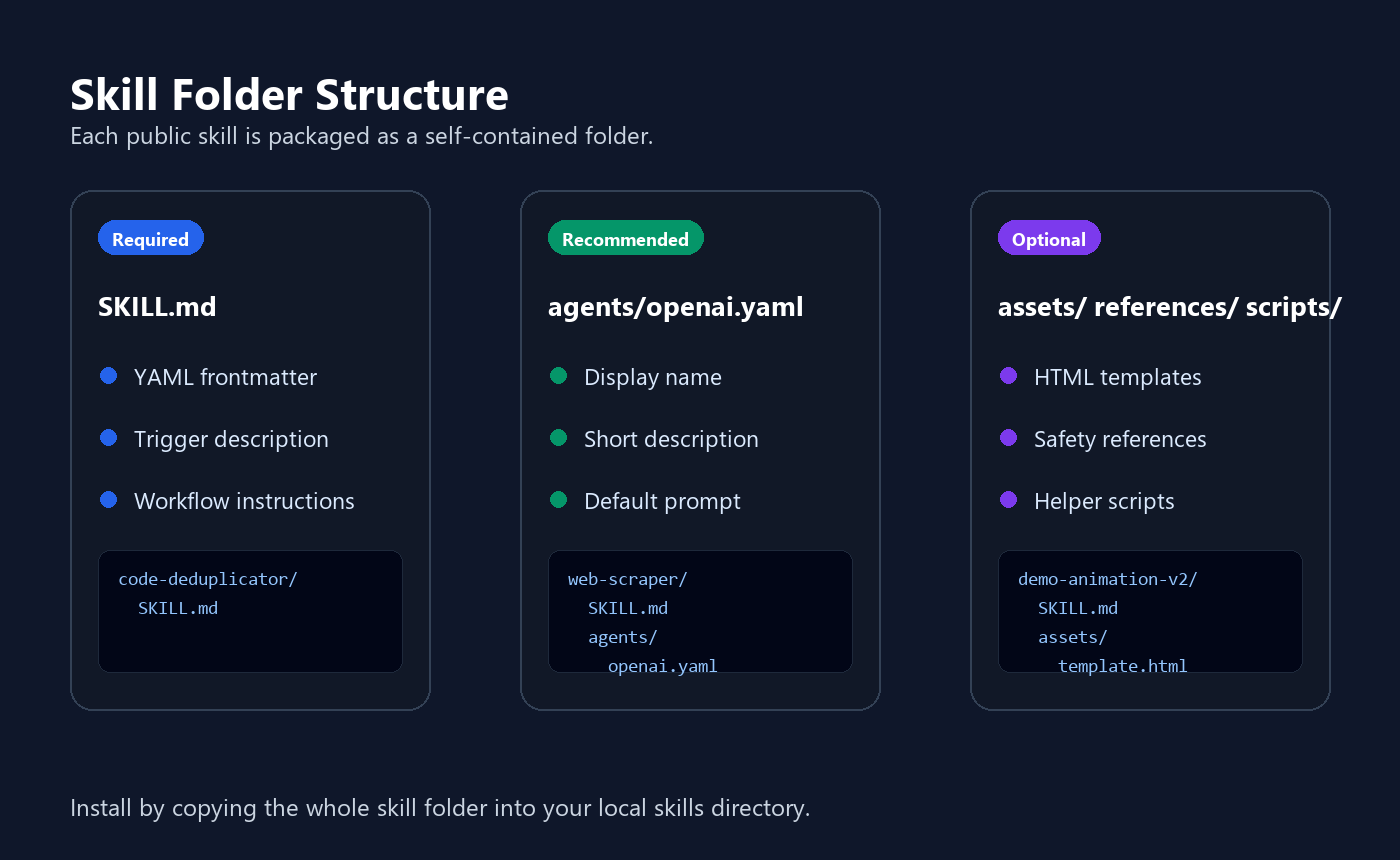
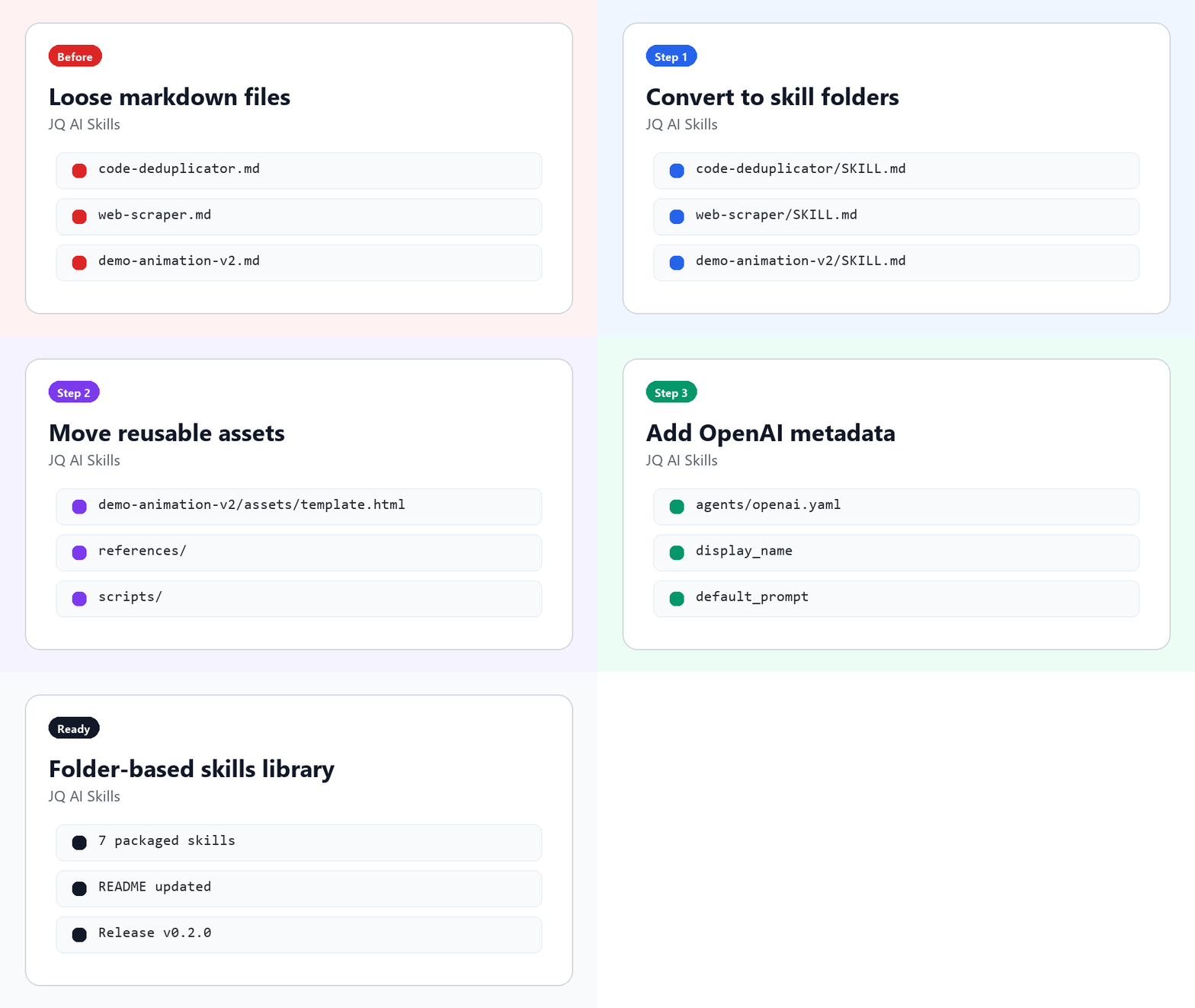
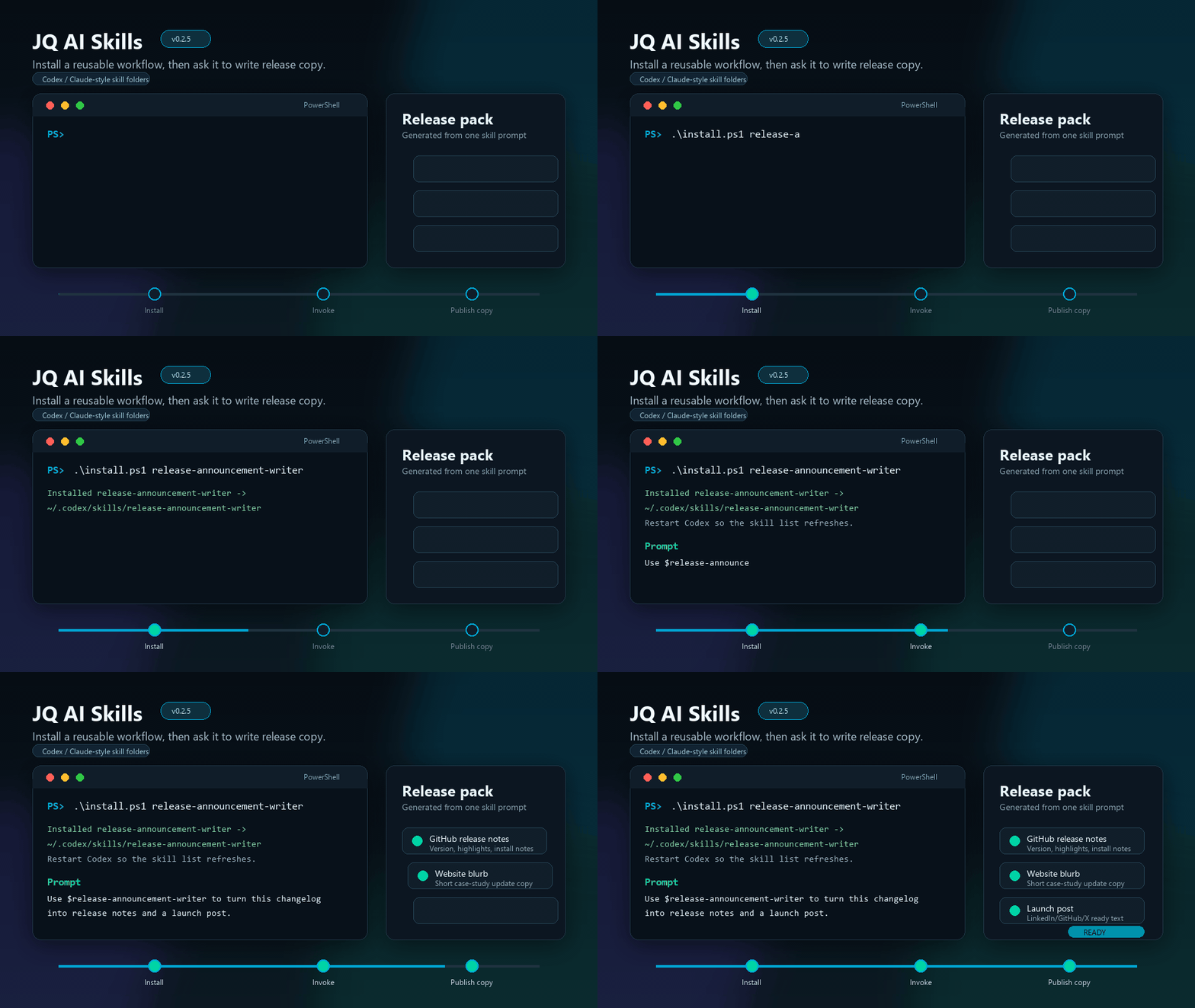
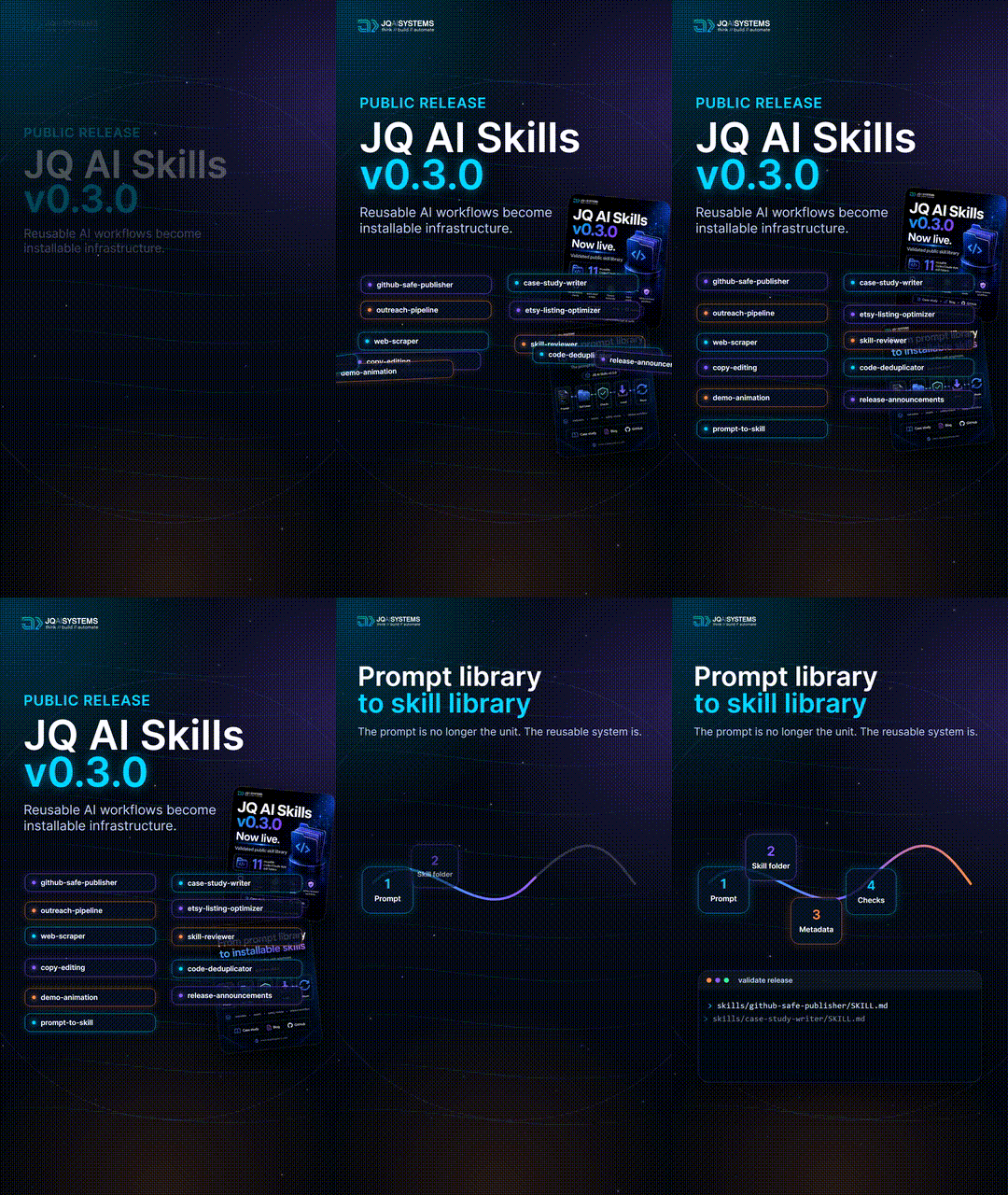
These public repository assets show the library as a structured system rather than a loose prompt collection: overview, folder structure, packaging workflow, and install flow.
Built with.
What changed.
The important outcome is operational memory. JQ AI Skills turns useful agent behavior into something that can be inspected, improved, installed, and shared. That is the difference between a clever prompt and a small piece of reusable AI infrastructure.
Want a system
like this one?
Book a free 30-minute call. We map your situation, scope a similar build, and agree on a fixed quote before anything starts.
Book Free 30-min Call