Mark
The mark becomes the interface
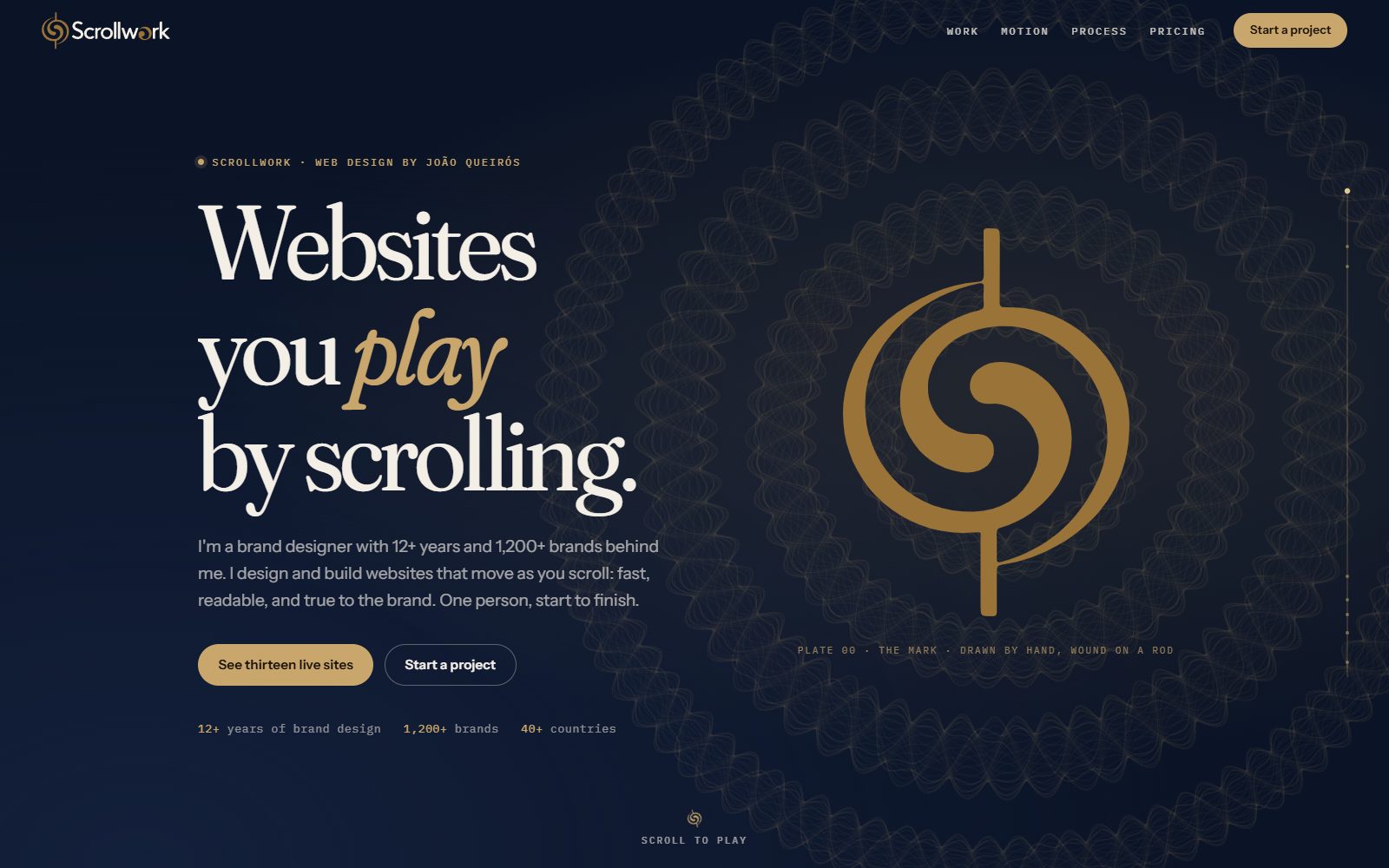
The logo is a spiral S wound on a rod. On the page it draws itself in brass, then flies into a fixed rod at the edge of the screen and becomes the scroll thumb, turning as you scroll.
 Scrollwork · web design studio
How I built a web design showreel you play by scrolling: live sites inside scroll-driven frames, a logo that becomes the scroll bar, and two films made in code.
Logo, site, films and score by João Queirós · now offered to clients as Scrollwork

The studio in one minute: the mark draws itself, live sites scroll inside their frames, and the logo assembles on the last chord. Designed, animated and scored in code by me. Turn the sound on.
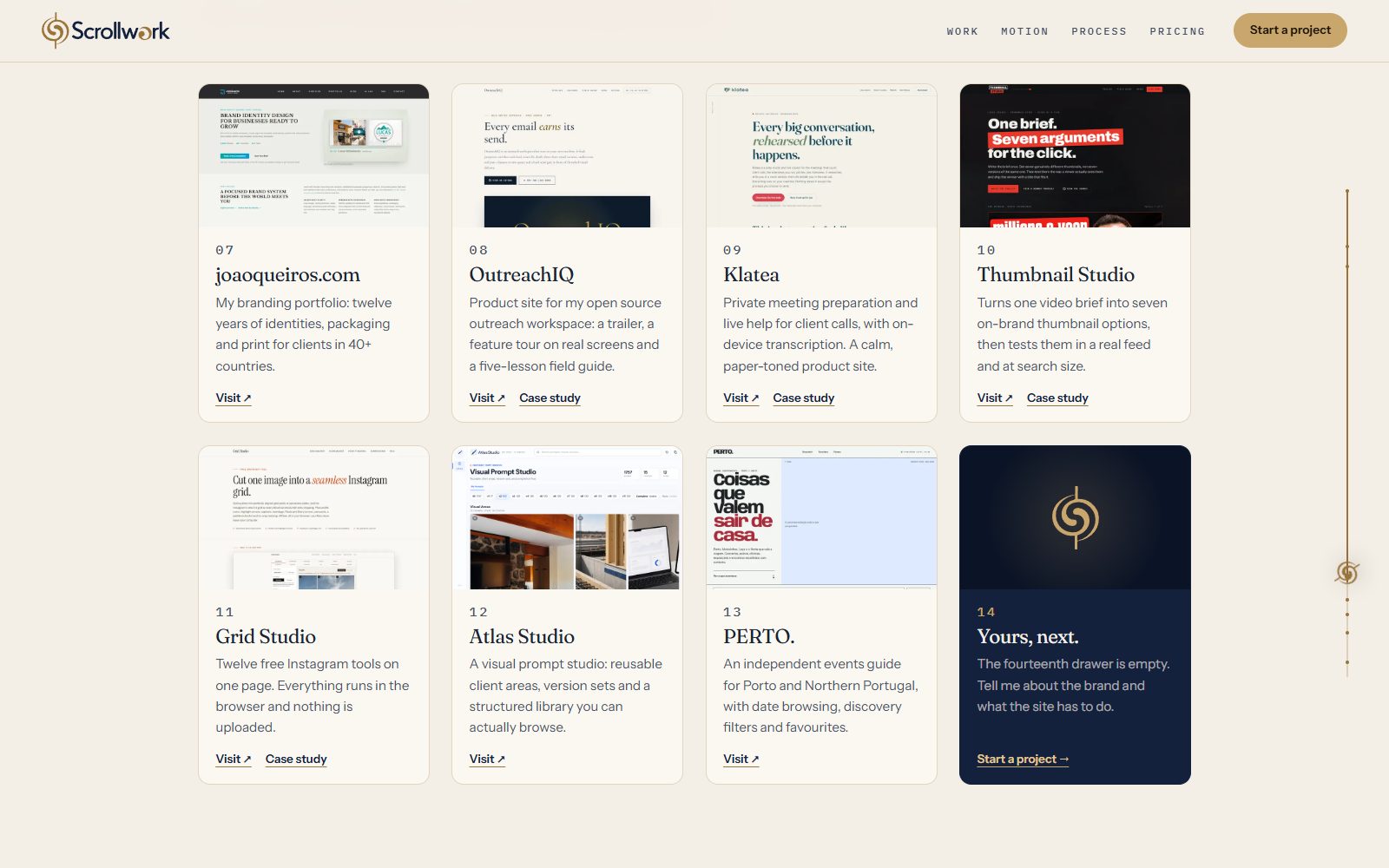
Scrollwork is my web design studio, and this is how I built its showreel. Instead of a grid of screenshots, the page plays real, live websites: each site is captured as one tall strip, and the visitor's own scroll drives it inside a browser frame. The brass logo I drew, an S wound on a rod, becomes the page's scroll bar. Two 60-second films are made the same way as the sites, in code: one shows the finished work, the other shows how a site is made. The page loads in about 1.5 seconds on a throttled phone test, barely moves while it loads, and has a still version of every animated scene for people who turn motion off.
A web design portfolio has an odd problem: the thing being sold moves, and the usual portfolio doesn't. A grid of screenshots shows how a homepage looks at one moment. It can't show what arrives as you scroll, how a section settles, or whether the motion helps the brand or just decorates it.
I spent twelve years designing brands before building websites, so the gap bothered me twice. Buyers judge a site by how it feels to move through, and most portfolios ask them to imagine it.
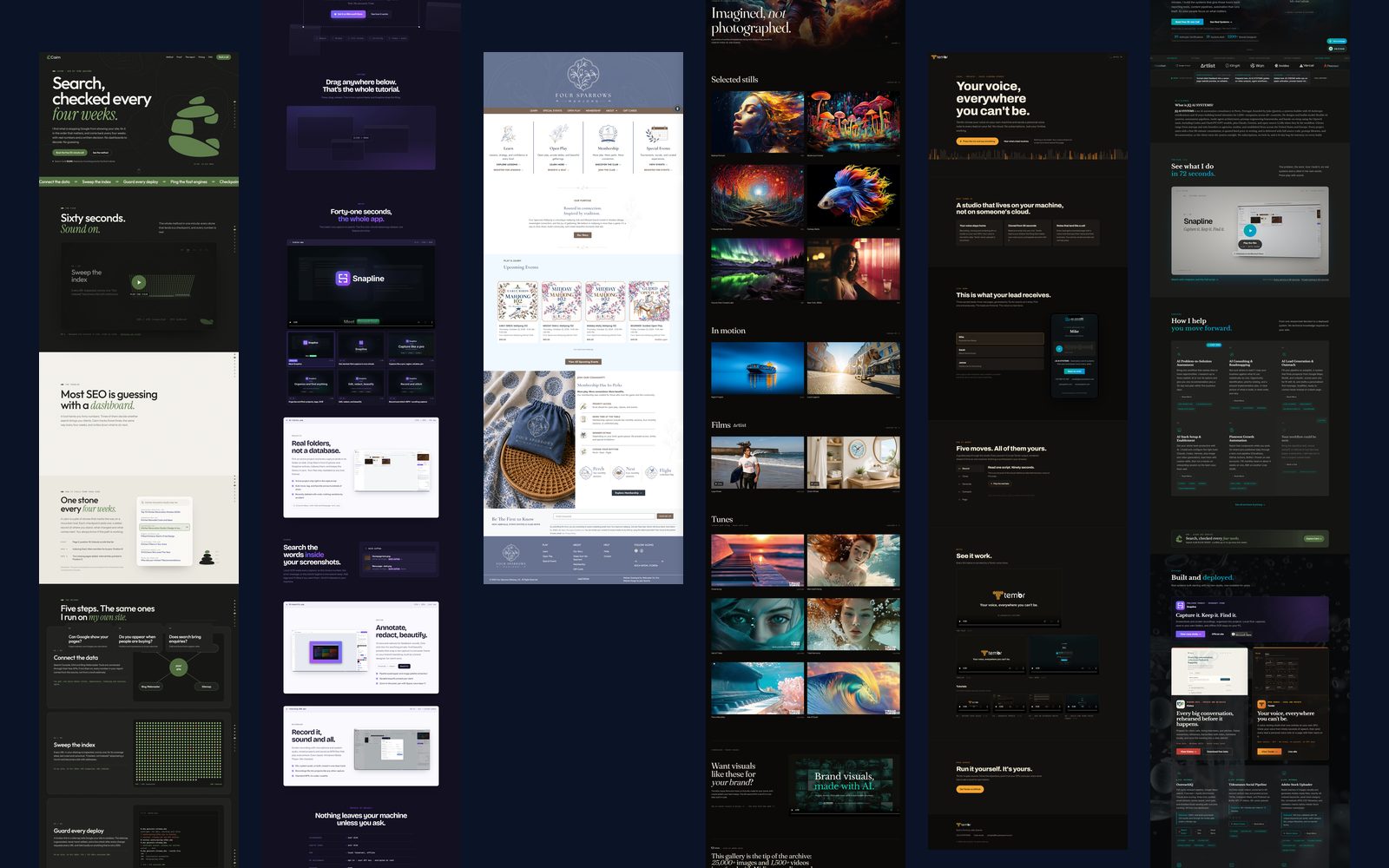
So the showreel had to be played, not viewed. I captured each live site the way a visitor sees it, tile by tile while scrolling, and stitched the tiles into one tall strip. On the Scrollwork page those strips sit inside browser frames, and the page scroll drives them, so scrolling my page scrolls theirs.
The brand does the rest of the work. The logo I drew is a spiral S on a rod, which is also a scroll bar and its thumb, so the mark flies into the edge of the page and becomes the scroll instrument. Banknote-style guilloché, engraved plate numbers and a navy and brass palette carry the "scrollwork" idea through every section.
Then I made two films in code, with their own scores: a reel of the finished work, and an exploded view of how a site is made.
The logo is a spiral S wound on a rod. On the page it draws itself in brass, then flies into a fixed rod at the edge of the screen and becomes the scroll thumb, turning as you scroll.
A small capture tool drives Chrome through each live site at 1440 pixels, scrolling the way a visitor does so lazy images and reveals load, then stitches the views into one strip. Cookie banners are hidden with CSS, never clicked or accepted.
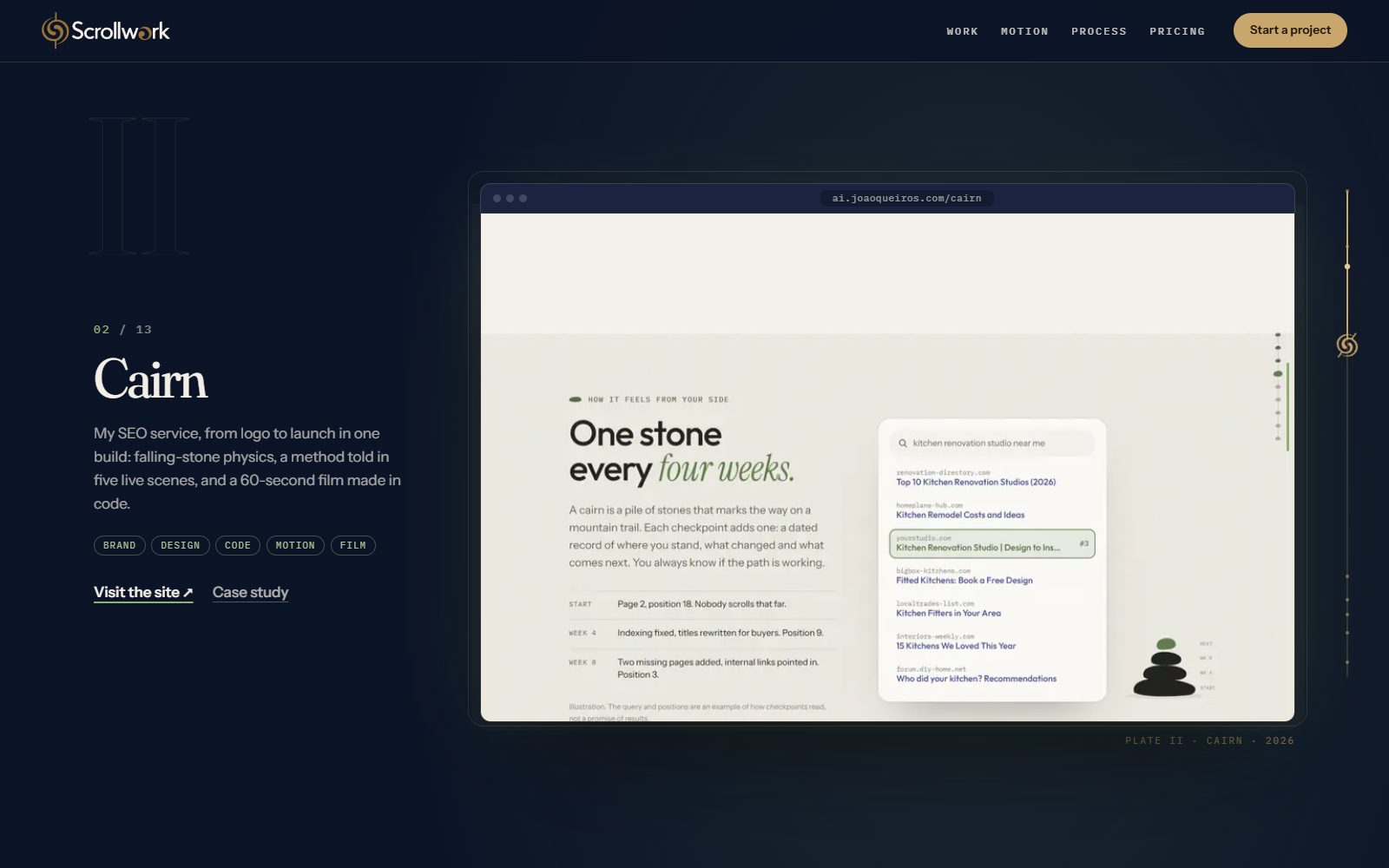
Each featured site is a pinned plate. The page scroll moves the captured strip inside its frame, with a scroll thumb in the site's own colour. Phones get an auto-scroll instead, and reduced motion gets a still.
Both films run on a canvas engine where every frame is a function of time, so they export frame-perfect. The music is written in code from the same timeline, so every sound lands on its moment.
Plain HTML, CSS and JavaScript with no libraries. The tall captures load only when their plate is near, both films load only when played, and every animated scene has a finished still version.
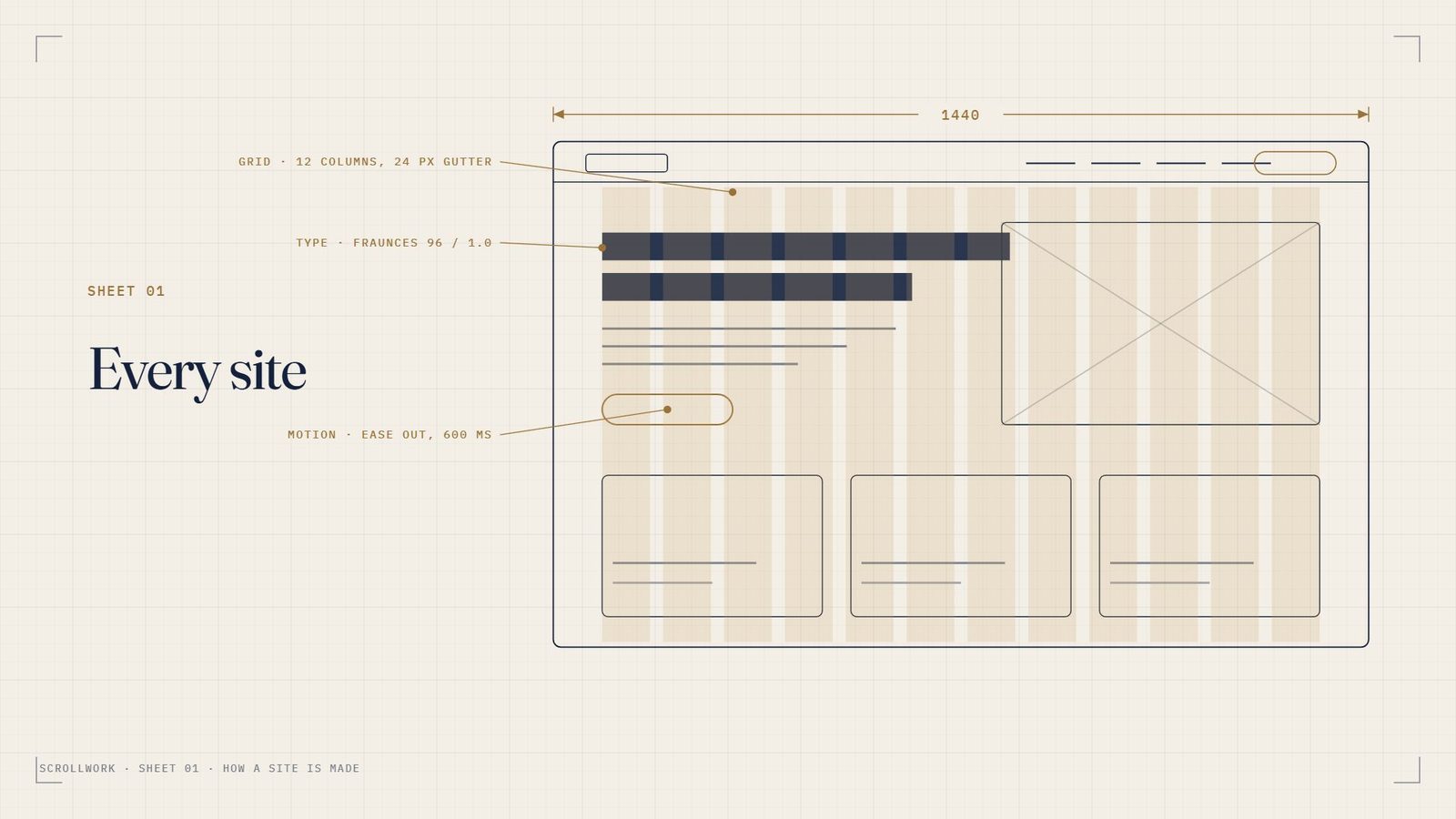
The craft behind every Scrollwork site: the drawing, the grid, the easing curve, and real pages pulled apart into their layers. It plays on the Scrollwork page above the process.
Scrollwork launched on 22 October 2026 and the films on 23 October. It is too early for honest results, so this page reports only what I measured while building it. At the next checkpoint I will add what the page actually does: which banners bring visitors, which film gets played, which sites people open, and, the one that counts, web design enquiries. One credit: on the Four Sparrows Mahjong site shown in the reel, I designed the brand identity and the base website design, and Beth Varian of Webmaster For Hire developed it in WordPress.
Tell me about the brand and what the site has to do. We start with a free 30-minute call, and you get a fixed quote before any work begins.
Add your name and email to unlock recording.
Your recording is emailed to me and kept on this site's server for 12 months, then deleted. Privacy policy.
Thanks for your voice message. I listen to every one myself and I will get back to you within one business day.
Explore João's services and public work, or arrange a free 30-minute consultation.
Choose a time with Cal.com. Your booking status is shown there. No calendar details are shared with this assistant.
Open booking in a new tabWhen enabled, each question is processed by Cloudflare AI and checked for abuse with Turnstile. No chat history is stored by this app. Please leave out private information.
Prepared answers · Public information